

The most discreet detail still has something to say.
edge pulls offer an edge-led, lower-profile approach to cabinetry. Their geometry and projection deserve as much care as a more conspicuous handle.
Made to order in England for architectural millwork for townhouses, apartments and high-end residential interiors across the United States.
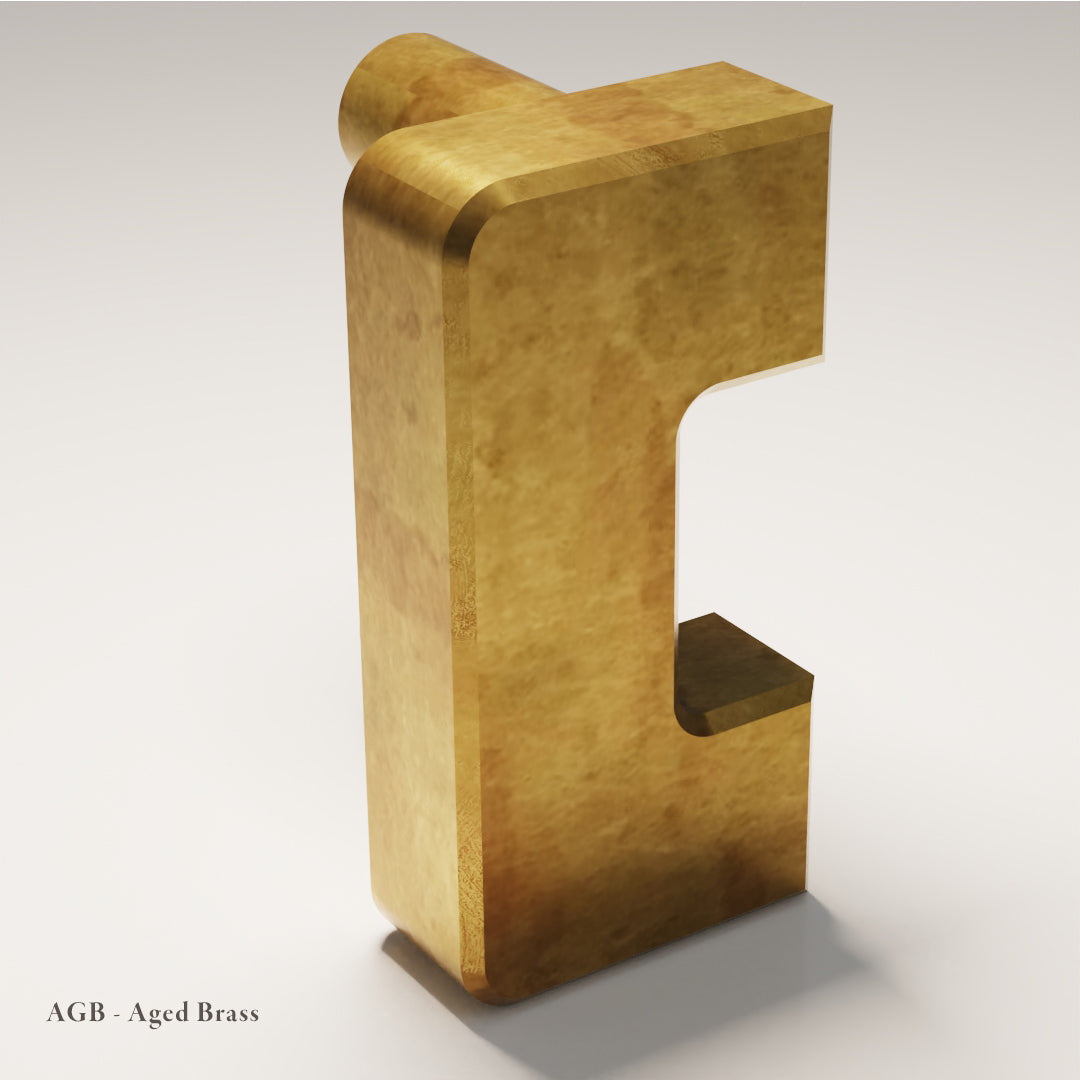
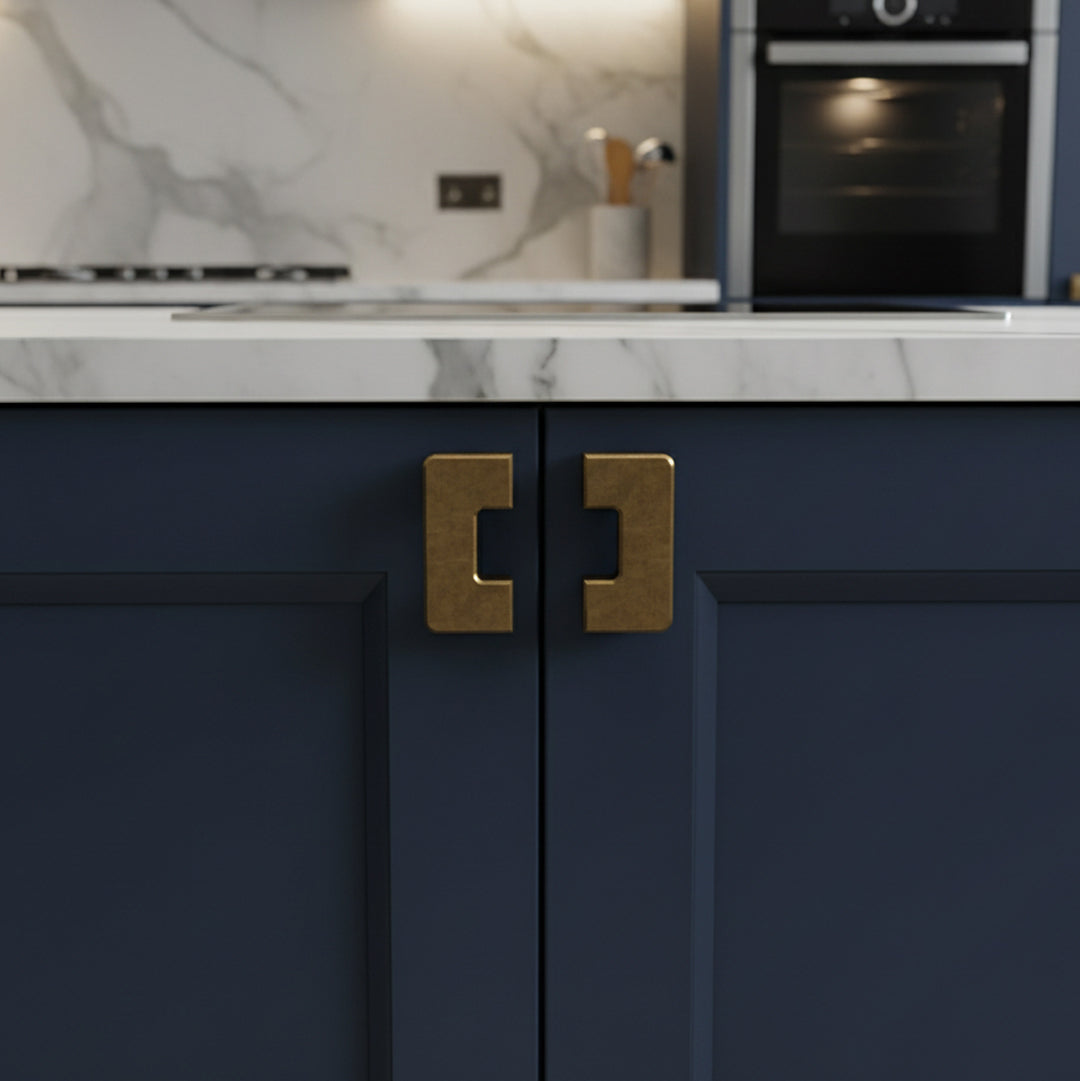
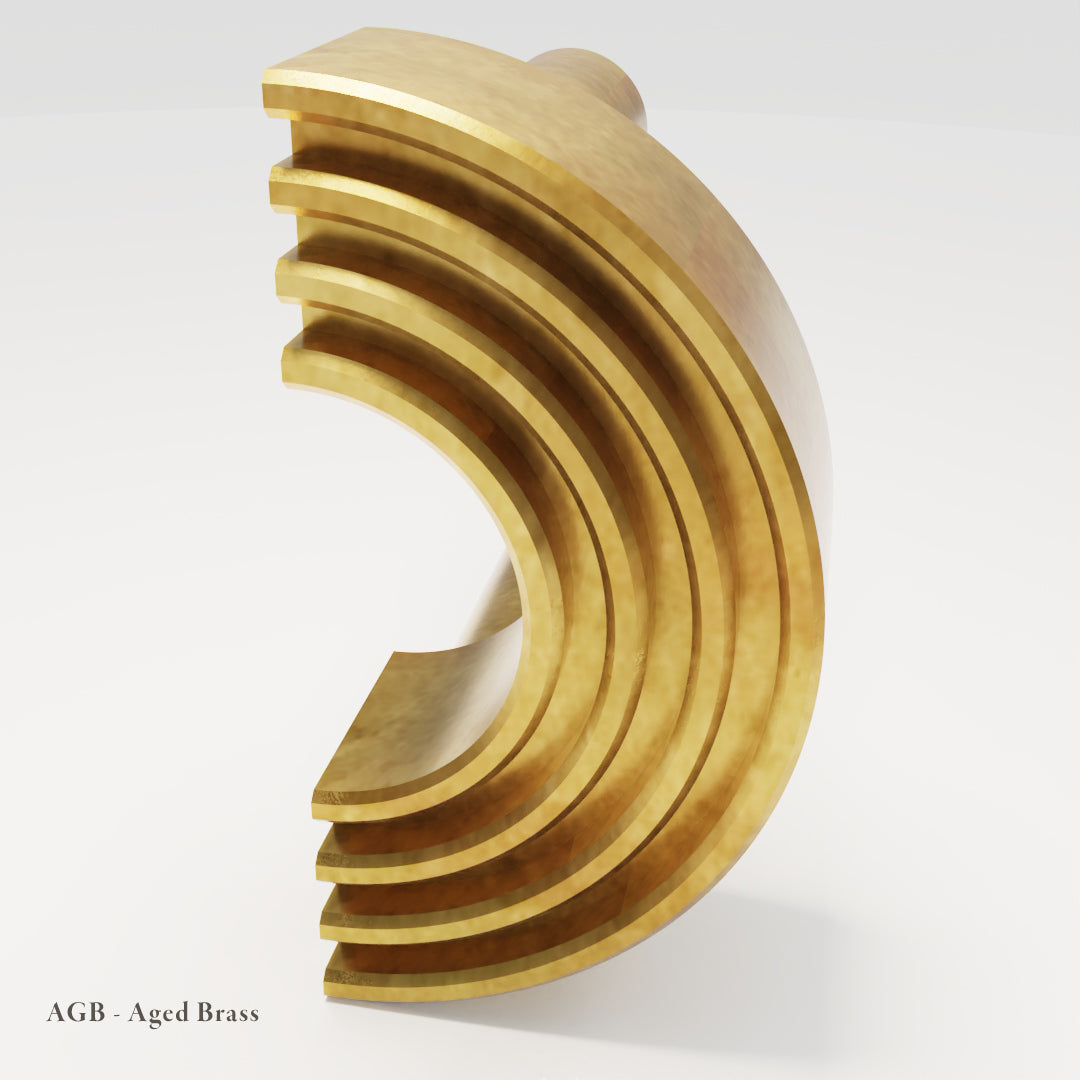
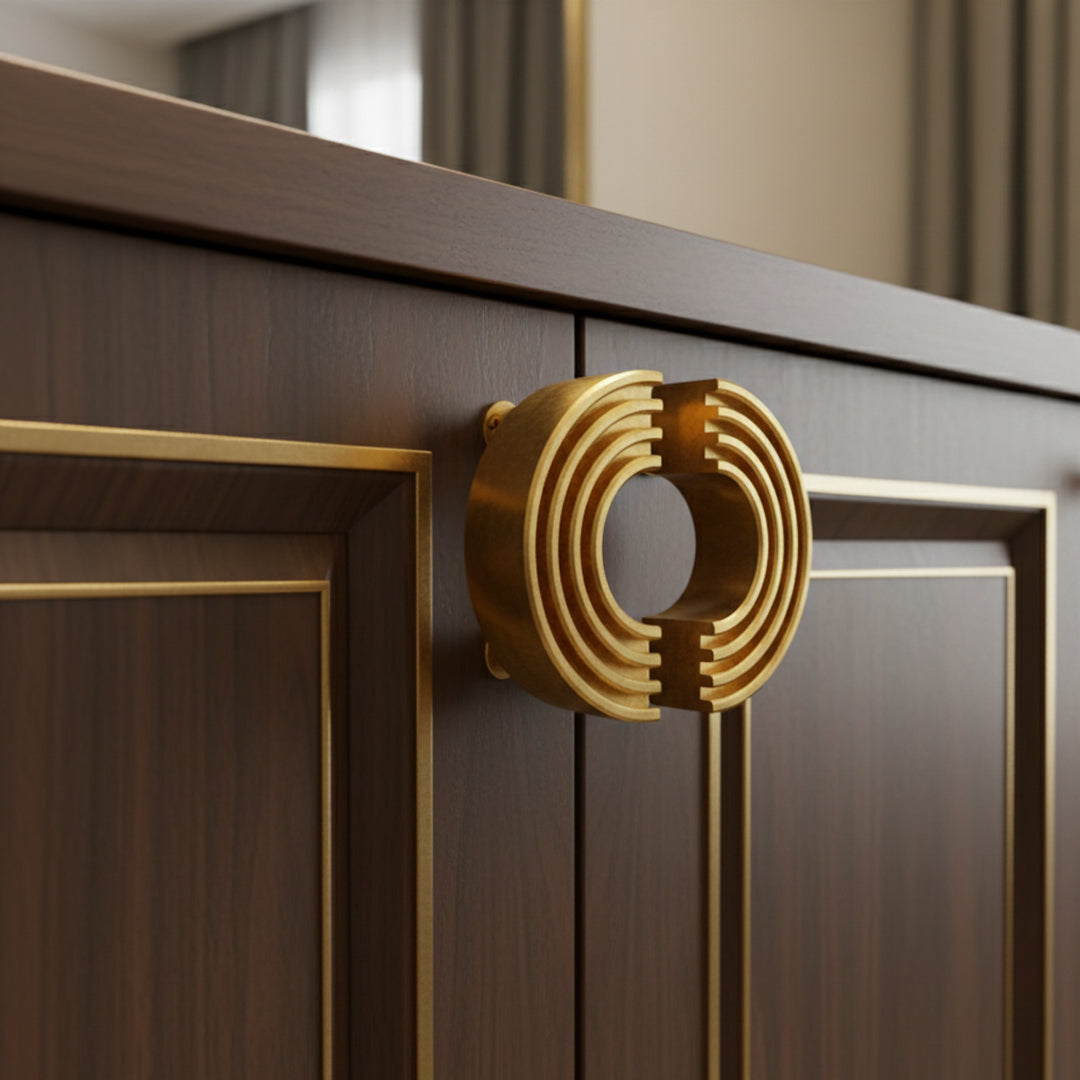
Edge pulls and C pulls for US projects are best used where cabinetry needs a clean pull point without the visual weight of a full face-mounted handle. This collection brings together Capramont & Co solid metal C pulls and finger pulls made in England for US kitchens, closets, built-ins, bathroom vanities, laundry rooms, mudrooms, media cabinetry and custom millwork packages.
Use this page when a designer, cabinet shop, builder or millwork team needs to compare edge-led pull families by size, projection, grip clearance, cabinet edge position, finish direction and room-by-room consistency. For active US projects, send elevations, cabinet schedules, door and drawer counts, room quantities or existing hole spacing before ordering so the C pull package can be reviewed before production in England.
How US projects use edge pulls and C pulls
| Slab cabinet doors | Use edge pulls on slab doors, flat panels and clean cabinet fronts where the hardware should sit close to the door edge, reveal or shadow line rather than across the face. |
| Closets and built-ins | Use C pulls on closet doors, dressing room cabinetry, media walls, bar cabinetry and furniture-style built-ins where a quiet vertical or horizontal pull line is preferred. |
| Vanities and utility rooms | Use edge-led pulls on bathroom vanities, laundry room storage and mudroom cabinetry where projection, grip clearance and finish durability need to be checked before production. |
| Drawer banks | Use C pulls on drawer fronts where the grip should align with the top edge, side edge or shadow gap. Check hand clearance carefully on wide or heavily used drawers. |
| Mixed hardware schedules | C pulls can work with knobs, cabinet pulls and appliance pulls in the same home. Keep finish, room logic, pull orientation and placement rules consistent across the full schedule. |
Choose the C pull by job
| Edge position | Decide whether the pull sits on the top edge, side edge, drawer edge, door stile, vertical reveal or horizontal shadow line before drilling or releasing the cabinet package. |
| Grip clearance | Check finger space, projection and the cabinet gap behind the pull. Edge pulls must feel usable, not just visually minimal. |
| Door and drawer scale | Use shorter C pulls for smaller cabinet doors, secondary positions and narrow drawers. Use longer sizes where the front is taller, wider or needs stronger hand purchase. |
| Finish approval | Approve the finish against cabinetry, stone, appliances, lighting, plumbing fixtures and nearby metalwork before production, especially in kitchens, vanities and coastal homes. |
| Schedule control | For larger US homes, keep every edge pull size, finish, room, cabinet position, orientation and companion hardware decision in one hardware schedule before release. |
US C pull specification direction
| Minimal kitchens | Best where slab fronts, flat doors and clean drawer banks need a precise edge-led pull point without introducing a large surface-mounted handle. |
| Architectural millwork | Best for built-ins, wall panelling, media cabinetry, bar cabinetry and closet systems where hardware needs to follow an architectural line or reveal. |
| Whole-home schedules | Best where C pulls are used as one part of a wider hardware package with knobs, cabinet pulls, T-bars, cup pulls and appliance pulls across several rooms. |
Fast edge pull specification guide
| Best uses | Slab cabinet doors, drawer edges, closets, built-ins, media walls, vanities, laundry rooms, mudrooms, bar cabinetry and architectural millwork. |
| Fitting logic | A C pull needs the right size, fixing position, edge clearance, finger space, projection and orientation before drilling starts. |
| Pairing logic | Use C pulls where the pull line should sit at an edge. Use cabinet pulls where more leverage is needed, knobs for smaller doors and cup pulls for drawer-led traditional cabinetry. |
| Main risk | The main risk is treating an edge pull like a normal handle. Wrong edge position, poor finger clearance or inconsistent orientation will be obvious across repeated cabinetry. |
| Best workflow | Choose the C pull family, confirm edge position and finish, set orientation by room, then release one schedule with quantities, locations and companion hardware notes. |
When to choose cabinet pulls instead
Edge pulls and C pulls are excellent where the hardware should sit close to a reveal, stile, rail, door edge or drawer edge, but they are not the right answer for every front. Wide heavy drawers, pantry doors, appliance panels and full-height millwork often need cabinet pulls for stronger leverage and scale.
A strong US hardware schedule may use C pulls on clean slab doors, knobs on smaller cabinet doors, cup pulls on drawer-led traditional cabinetry and cabinet pulls on tall or heavy fronts. That gives the project a practical hierarchy while keeping the finish and product language controlled.
Made in England for US project schedules
Capramont & Co manufactures solid metal C pulls and edge pulls in England for specification-led interiors. Heritage finishes provide the main interior palette, while selected Atelier Metals can be reviewed for bathrooms, coastal homes, yachts, humid locations, hospitality use or projects with higher material demands.
For larger US homes, submit the edge pull schedule before order. That lets kitchens, closets, mudrooms, laundry rooms, vanities, media walls and built-ins share one controlled hardware language while each position receives the right size, clearance, projection, orientation and finish.
Related US specification routes
Hardware Type · Hardware Finder · Cabinet Pulls · Cabinet Knobs · T-Bar Pulls · Cup Pulls · US Specification Center · Send Project / Drawing Details
A note on specification
Check the edge condition, fixing centres and projection on the selected design.