Check rails, stiles and reveals
Hardware placement should work with the visible frame, door panel and drawer proportions. Projection and fixing points need to be reviewed before the cabinetry is drilled.
Review installation guidance

Capramont & Co makes cabinet knobs, cup pulls, cabinet handles, T-bars and appliance pulls in England for classic kitchens, pantries, mudrooms, vanities and fitted cabinetry in Boston, Nantucket, Cape Cod, Martha’s Vineyard and across New England.
New England projects frequently combine inset or face-frame cabinetry, shaker doors, painted kitchens, timber accents, traditional drawer layouts and renovation constraints. Confirm the cabinet construction, fixing centers, projection, hardware scale, finish and room-by-room quantities before drilling or production.
Capramont & Co recommends selecting cabinet hardware for New England classic kitchens according to inset or face-frame construction, rail and stile dimensions, drawer width, existing or proposed fixing holes and the relationship between the kitchen, pantry, mudroom and vanity cabinetry. Knobs and cup pulls suit many traditional drawer and door layouts, while refined cabinet handles provide additional grip on wider drawers, tall doors and appliance panels.
Hardware placement should work with the visible frame, door panel and drawer proportions. Projection and fixing points need to be reviewed before the cabinetry is drilled.
Review installation guidanceKnobs, cup pulls and refined pull handles can support shaker cabinetry without making the hardware more dominant than the door and drawer construction.
Browse by architectural styleRenovation projects should begin with the actual distance between fixing holes. The center-to-center dimension is not the same as the visible overall length of the handle.
Check replacement centers| Application | What to check | Recommended route |
|---|---|---|
| Inset kitchen doors | Rail and stile width, reveal, knob scale, projection and repeated fixing position. | Review cabinet knobs |
| Pantry and drawer cabinetry | Drawer width, cup-pull grip, drilling consistency and relationship to the main kitchen. | Review cup pulls |
| Mudroom and utility cabinetry | Repeated use, comfortable grip, painted finishes, cleaning access and hardware consistency. | Review cabinet handles |
| Integrated appliance panels | Panel construction, fixing position, leverage, projection, clearance and relationship to the main hardware family. | Send appliance-panel drawings |
Knobs suit framed doors, smaller drawers, vanities and furniture where restrained scale supports the cabinetry rather than competing with it.
Explore cabinet knobsCup pulls work well on pantry drawers, mudrooms, utility cabinetry and traditional kitchens requiring a grounded, familiar grip.
Explore cup pullsPull handles provide additional grip on wider drawers, tall pantry doors, closets and appliance-adjacent cabinetry.
Explore cabinet handlesT-bars offer more presence than a knob while remaining compact enough for smaller drawers and secondary cabinetry.
Explore T-bar pullsLonger pulls may be required for integrated refrigerators, freezers and tall pantry fronts after construction and leverage have been checked.
Find longer pull sizesCompare hardware by type, scale, style and finish before reviewing product dimensions and project requirements.
Open the Hardware FinderThese collections cover transitional, contemporary-classic, appliance-scale and Georgian directions for kitchens, pantries, mudrooms, vanities and whole-home cabinetry.
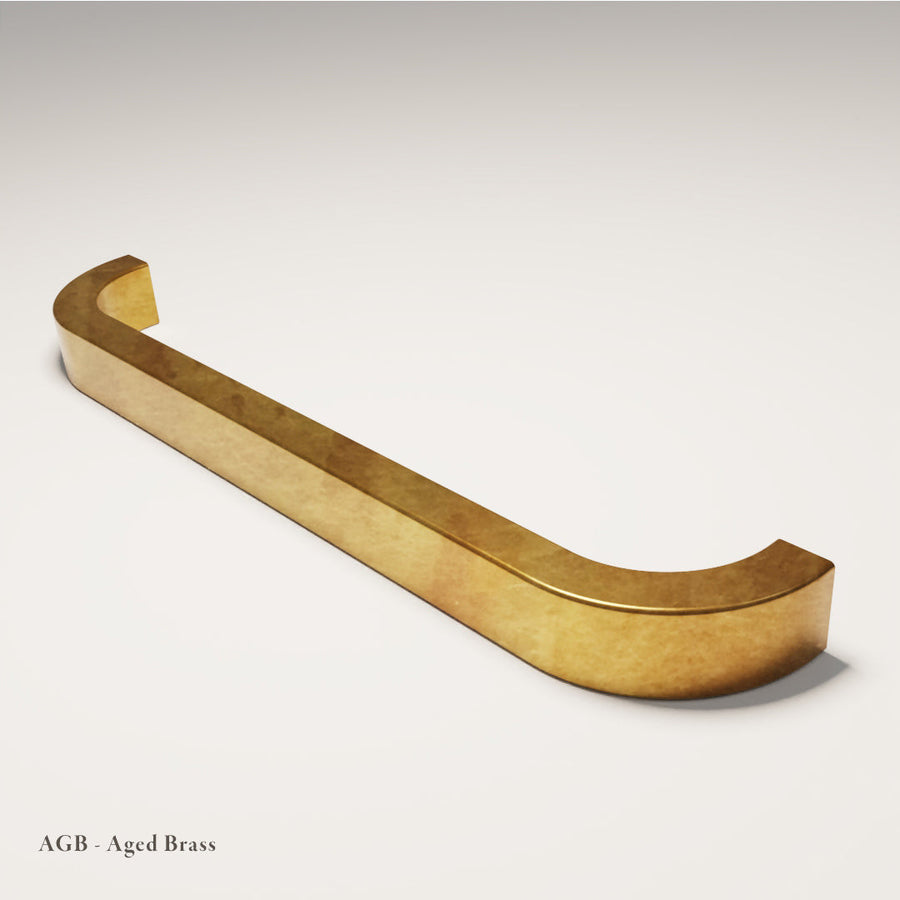
For shaker, inset and painted cabinetry requiring a slimmer bridge between traditional and contemporary interiors.
View Farringdon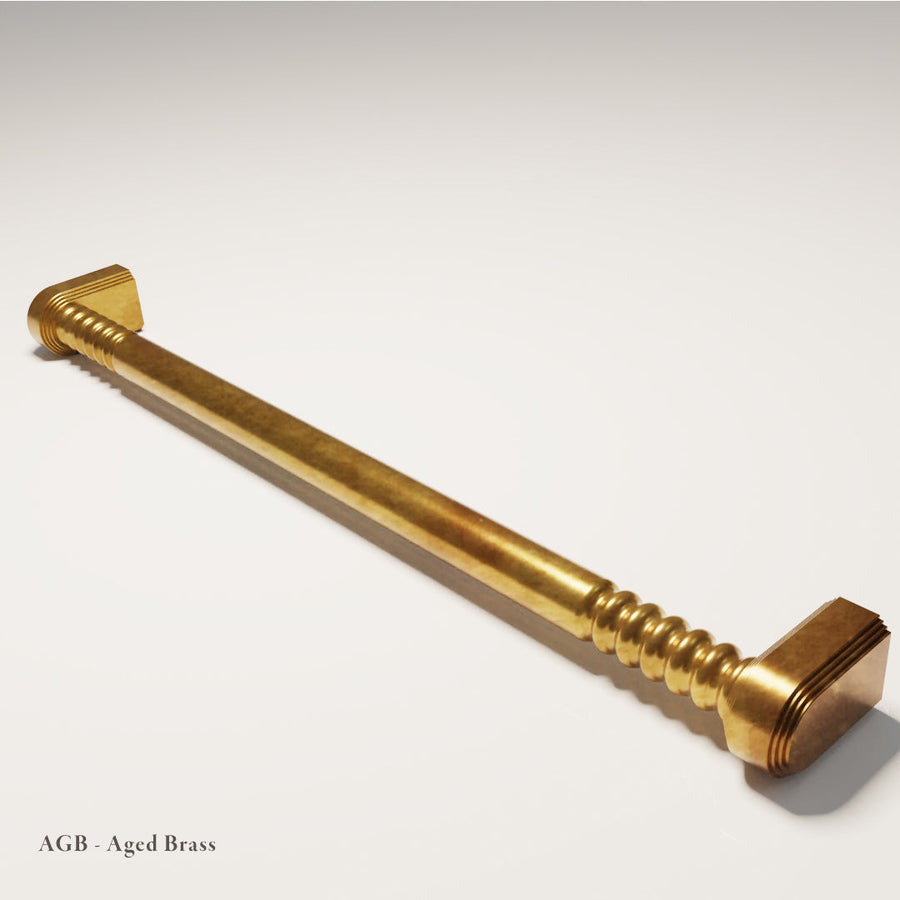
For kitchens, pantries and whole-home cabinetry requiring a refined family across smaller and larger fronts.
View Brunswick
For tall pantry doors, substantial drawers and appliance panels requiring longer centers and confident grip.
View Burlington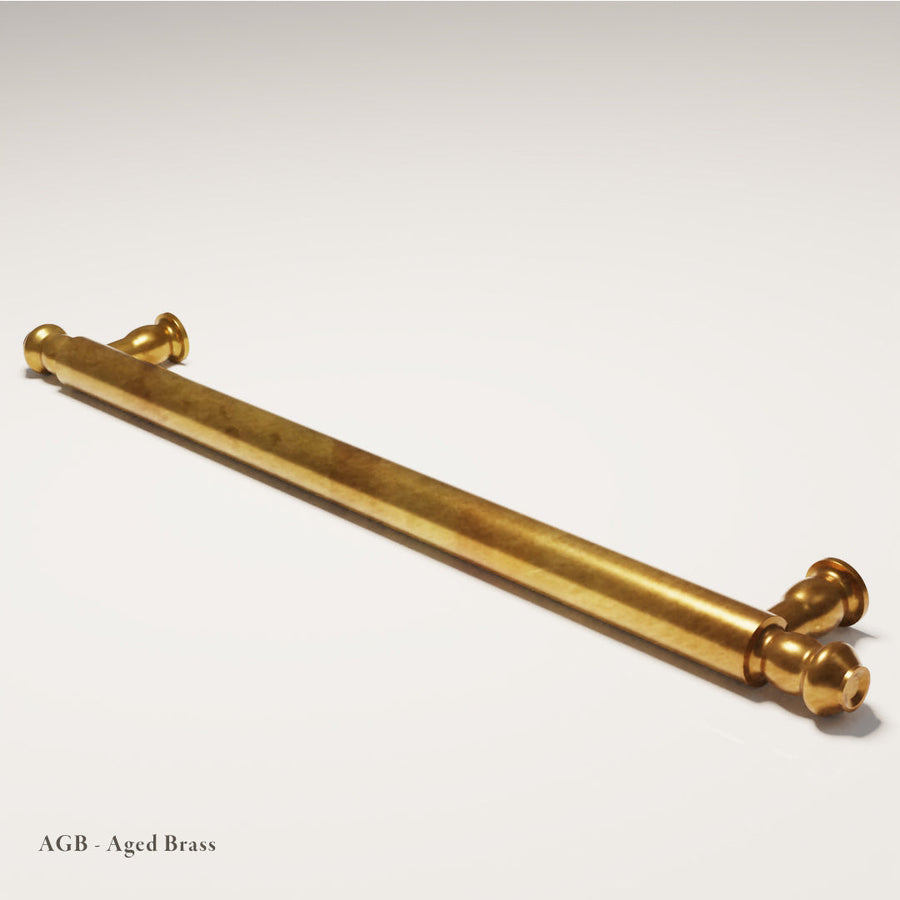
For traditional kitchens, fitted furniture and period-sensitive interiors requiring restrained classical proportion.
View HarringtonIn a renovation, the center-to-center dimension is the distance between the centers of the two fixing holes. It is not the overall visible length of the handle.
Measure each cabinet group, record the existing drilling and compare it with the proposed product dimensions. Where the preferred design does not match the existing holes, submit the project for custom-center review.
New England interiors often combine painted cabinetry, white oak, darker timber, marble, soapstone, limestone and traditional metal details. Coastal and seasonal light can alter how warm brass, bronze, nickel and stainless finishes appear, so approve the physical sample beside the actual project materials.
Warm white, gray, blue and green paints can change how brass, bronze, nickel and stainless finishes read.
Compare the finish against the actual timber and both daylight and evening lighting before approval.
Review hardware with stone, cabinetry, appliances, plumbing finishes and decorative lighting rather than in isolation.
Inset, face-frame, overlay or slab construction
Rail, stile, door and drawer dimensions
New drilling or existing replacement holes
Center-to-center fixing dimensions
Knob, cup pull or handle by cabinet type
Projection and grip clearance
Pantry and mudroom hardware continuity
Appliance-panel construction and leverage
Finish against paint, timber, stone and appliances
Physical finish-sample approval
Quantity by room and hardware type
Final Hardware Schedule before drilling
| Common error | Why it matters | Recommended route |
|---|---|---|
| Selecting hardware without checking the inset frame | Pull fixing and projection may conflict with rails, stiles, reveals or adjacent cabinet fronts. | Review fitting guidance |
| Measuring overall length instead of fixing centers | Replacement pulls may not match the existing holes even when their visible lengths appear similar. | Check the replacement matrix |
| Using one hardware type on every cabinet front | Knobs, cup pulls and handles serve different door, drawer, pantry and appliance applications. | Compare hardware types |
| Approving finishes away from the project materials | Paint, timber, stone, coastal daylight and evening lighting all influence how the finish appears. | Approve a physical sample |
Knobs, cup pulls and refined cabinet handles can all work. The final choice depends on rail and stile positions, drawer width, grip, projection and the architectural character of the room.
It can use the same collection and finish while varying the hardware type or size to suit pantry drawers, tall doors and appliance fronts.
Measure the center-to-center distance between the existing fixing holes and compare it with the proposed product centers. Do not rely on overall pull length.
Yes. Send drawings, existing or proposed centers, door and drawer counts, appliance-panel details, material references and preferred finishes before drilling or production.
Send kitchen, pantry, mudroom, vanity and appliance-panel drawings with cabinet construction, existing or proposed centers, finish references and estimated quantities. Capramont & Co can review hardware type, scale, replacement centers, custom centers, finish samples and Hardware Schedule requirements.