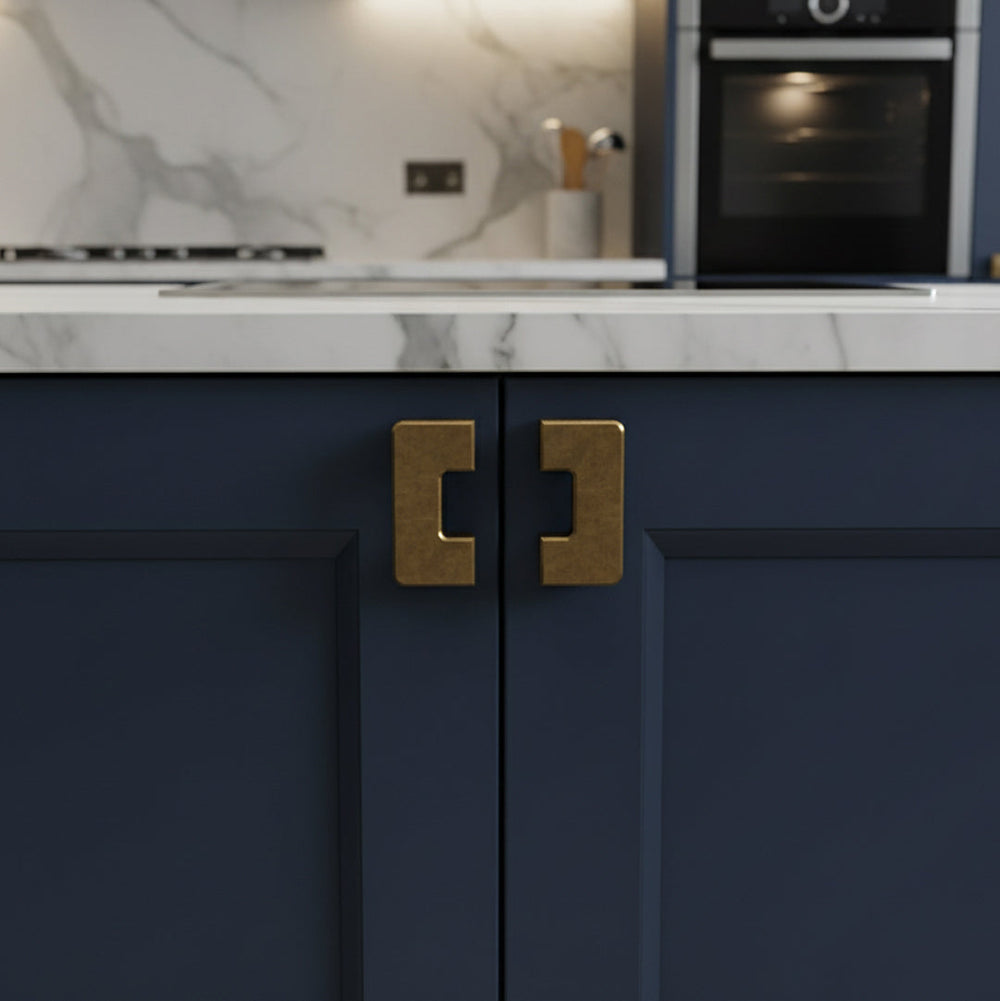
Naval brass · 316L review
Beaufort
Refined architectural family often reviewed where a warmer design language is required alongside selected Performance Metals routes.


Cabinet Hardware Specification System · Project Application
For yacht interiors, refits and specialist fitted joinery in the UAE, coordinate hardware across cabins, vanities, galleys and large panels with material, dimensions, finish approval and project control resolved before manufacture.
Made to Order in England · Custom Sizes — No Minimum Order · Performance Metals · Finish Approved Before Production · Drawing & Hardware Schedule Support
01 · Project Condition
New-build cabinetry, refit work, humid interior zones and large panel fronts create different hardware requirements. Establish the real project condition first, then resolve geometry, material, physical approval and project control.
Resolve centres, overall scale, projection, door construction and repeated dimensions before drilling.
Record existing drilling before removing legacy hardware. Eligible pulls can be reviewed around project-specific centres.
Vanities, galleys and other moisture-prone locations should be reviewed for humidity, cleaning and exposure.
Review leverage, projection, fixing access, panel construction and repeated use rather than scaling a standard drawer pull visually.
02 · Interior Application Matrix
Use the application as the first filter. The correct route depends on environmental exposure, handling frequency, panel geometry, restricted clearances and whether the work is new-build or refit.
| Interior area | Primary hardware question | Specification direction | Best next route |
|---|---|---|---|
| Cabins & wardrobes | Repeated dimensions and family coordination | Coordinate pull scale and centres across doors, drawers and fitted storage. | Hardware Finder |
| Bathrooms & vanities | Humidity, cleaning and material environment | Review 316L, naval brass and other supported material routes by project condition. | Materials & Finishes |
| Galley cabinetry | Grip, clearance and repeated handling | Check projection, fixing, panel construction and the operational space around adjacent fronts. | Projection & Fixings |
| Bars & entertainment joinery | High-touch use and material/finish direction | Review surface expectations and the underlying material separately from colour. | Material review |
| Appliance & tall panels | Pull scale, leverage, fixing and projection | Review the panel build-up, rear access, grip and clearances before drilling. | Tall-panel engineering |
| Refit cabinetry | Existing drilling and non-standard centres | Measure existing hole spacing before assuming a replacement standard. | Replacement matrix |
Boundary: this page concerns cabinet hardware for fitted yacht interiors. It does not specify exterior deck hardware, safety hardware, structural marine equipment or general vessel hardware.
03 · Dimensional & Fit Engineering
Yacht joinery often combines restricted spaces, repeated elevations, unusual panel build-ups and bespoke drilling. The hardware must be resolved against the actual drawings rather than forcing the cabinetry to a retail size.
Confirm the drilling dimension separately from overall handle length and record repeated dimensions across the package.
Centres / ReplacementEligible made-to-order designs can be reviewed where project geometry or existing drilling requires a non-standard centre.
Custom CentresCheck usable hand clearance, adjacent panels, drawer movement, corners and circulation before release.
Projection & FixingsConfirm panel build-up, rear access and required engagement. Thread size does not determine final screw length by itself.
Installation & Fitting04 · Refit & Existing Drilling
A refit should not begin by forcing established cabinetry to accept a new standard size. Record the current drilling and review whether an eligible Capramont pull can be made around the required dimension.
Record hole spacing, front thickness, quantity, preferred overall scale and photographs or drawings where available.
Compare the existing drilling with current standard centres and the eligible custom-centre route before changing the cabinetry.
Lock the selected product, centres, projection, material/finish and quantity before the refit package is released.
05 · Performance Metals
There is no single universal yacht-interior material. Performance Metals routes solve different environmental, visual, weight and use conditions. Final suitability remains product- and application-specific.
| Material route | Primary reason to review | Yacht interior direction |
|---|---|---|
| Marine-grade 316L stainless steel | Moisture, humidity and salt-air resistance | Vanities, bathrooms and selected cabinetry where environmental resistance is central. |
| Naval brass | Warm metal with a performance-led base alloy | Cabins, bars and fine joinery where warm metal forms part of the interior language. |
| Nickel-coated naval brass | Cool nickel appearance on naval-brass substrate | Selected interiors requiring a cooler metal direction with the underlying marine-oriented alloy route. |
| Grade 5 titanium | Low mass and inherent corrosion resistance | Specialist material-led interiors where weight and the underlying metal itself form part of the brief. |
| Carbon-coated stainless steel | Performance-led coated stainless route | High-touch joinery where black or silver specialist surface direction forms part of the design brief. |
| Powder-coated aluminium | Low mass and controlled black/white finish direction | Selected lightweight architectural joinery where the application and coating route are suitable. |
06 · Large Panels & Tall Joinery
Refrigerator panels, tall pantry fronts and other large joinery elements can require different scale, fixing, leverage and clearance review from standard drawers or doors.
Review intended hand position and usable grip rather than choosing by visual scale alone.
Check surrounding panels, corners and clearances against the actual pull projection.
Explicit Appliance Pull variants use M6; ordinary Cabinet Pull variants use M5. Final screw length remains project-specific.
Larger pulls can coordinate with smaller cabinet hardware while preserving a consistent material and finish direction.
07 · Product & Collection Proof
These are starting points, not automatic suitability statements. Verify the live PDP, supported material route, geometry and project condition before release.
Refined architectural family often reviewed where a warmer design language is required alongside selected Performance Metals routes.
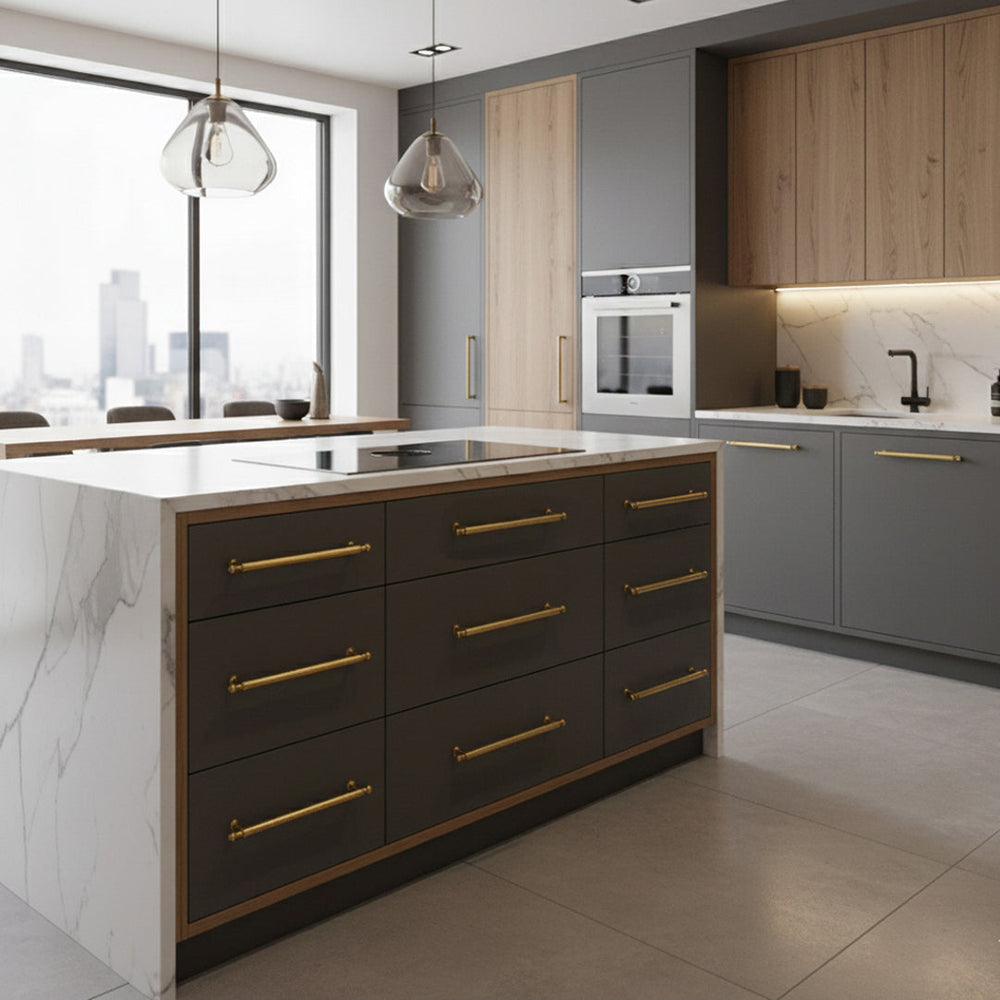
Versatile route where cleaner geometry and specialist Performance Metals review form part of the interior specification.

Technical collection route for projects where specialist material character, low mass and a sharper architectural expression are preferred.

Suitable to review where a softer classical hardware expression is required within vanities, cabins and fitted furniture.

Collection route where yacht interiors require visual warmth, grip confidence and a reviewed higher-performance material direction.

Useful where repeated use, large fronts or project-specific centres need to be reviewed as part of the joinery package.
08 · Physical Approval & Project Control
Use live product information to prove the hardware route, physical samples to approve material or finish, drawing review to resolve project-specific conditions and a Hardware Schedule where several interior areas need one controlled record.
Confirm the actual product, dimensions and supported material route on the current PDP before release.
Review the sample against cabinetry, stone, metalwork and interior lighting before made-to-order production.
Finish Sign-Off SampleUse when centres, front construction, existing drilling, large panels or quantities need coordination.
Project & Drawing ReviewControl location, product, size, centres, material/finish, quantity, drawing reference and approval status.
Start a Hardware Schedule09 · Related Specification Routes
The yacht page is one project-application surface inside the wider Cabinet Hardware Specification System. Keep every material, dimensional and project decision connected to actual products and the controlled specification workflow.
The four-module Capramont specification method.
MaterialsMaterials & FinishesHeritage, Performance Metals, project conditions and physical approval.
DrawingsProject & Drawing ReviewJoinery, centres, large fronts, quantities and unresolved conditions.
RefitCentres & ReplacementExisting holes, standard centre ladders and replacement decisions.
BespokeCustom CentresProject-specific drilling dimensions for eligible made-to-order hardware.
Large panelsAppliance Pulls & Tall UnitsPanel fitment, leverage, fixing, projection and drill-release review.
HubSpecification CentreSamples, drawing review, Hardware Schedules and project support.
ControlHardware ScheduleOne controlled record across cabins, vanities, galleys and other interior areas.
Refit applicationYacht Interior & Refit HardwareAdditional route for yacht refit and fitted-interior project conditions.
10 · Direct Answers
There is no single best material for every application. 316L stainless steel is the principal marine-grade stainless route; naval brass provides a warm performance-led option; Grade 5 titanium provides a low-mass corrosion-resistant route. The material should be reviewed against the actual interior condition and product availability.
No. Material selection should follow the real interior condition. Different Performance Metals routes address different environmental, weight, appearance and repeated-use requirements.
No. Performance Metals contains several different material routes. 316L stainless steel is the principal marine-grade stainless option. Other materials should be specified for their own properties and reviewed against the application.
Yes. Existing centre-to-centre dimensions can be reviewed against eligible hardware where the project needs to retain existing drilling.
Yes. Eligible hardware can be reviewed for project-specific centres where bespoke joinery, existing drilling or project geometry requires a non-standard dimension.
Yes. Large-front requirements can be reviewed for pull scale, centres, projection, grip, panel construction, rear fixing access and coordination with smaller cabinet hardware.
Yes. Project review can consider centres, projection, front thickness, existing drilling, intended material, quantities and other information supplied by the project team.
Physical review is recommended where material character, finish tone, cabinetry, stone, metalwork or lighting affect approval of the made-to-order hardware package.
Next Step
Confirm the project condition, resolve dimensions and clearances, select the material route, approve the physical reference and document the final products and quantities before made-to-order production.